Millie’s homelessness
The HousemaidMillie Calloway’s homelessness turns a search for employment into a search for the basic conditions of living: a place to sleep, wash, and keep her belongings. After losing her job and studio apartment, she spends a month in her Nissan, with everything she owns in its trunk. Nina Winchester’s offer of a live-in housekeeping job ends that immediate period without shelter, but the reprieve rests on an employment relationship Millie fears could collapse if her past is discovered—and on parole obligations she has already begun to conceal.
From Eviction to the Nissan
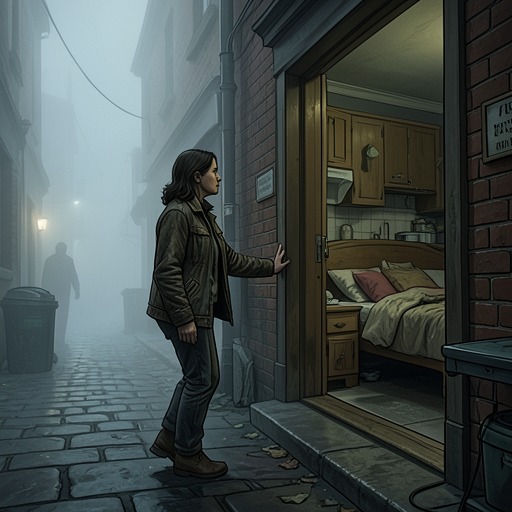
Millie’s slide into homelessness follows a compressed chain of losses. Three weeks after being fired from her job, she is evicted from her studio; three days after the eviction, she discovers a rest stop with showers. By the time she meets Nina about work, the ten-year-old Nissan parked outside the Winchester home is not simply transportation. It is where Millie lives, and its trunk holds all her possessions. She has spent the previous month sleeping in the back seat.
The car makes ordinary necessities into practical problems. Millie identifies a toilet, a sink, and enough room to straighten her legs while sleeping as luxuries whose absence becomes impossible to ignore. Cleanliness depends on the rest-stop showers, which offer little privacy and smell faintly of human waste. Her description is matter-of-fact rather than romantic: shelter is a cramped car, washing is a public facility, and even the relief of finding a shower comes against the discomfort of the place.
Food is similarly reduced to what can be stored and eaten in the car. Millie keeps cold cuts and cheese in a cooler and relies on inexpensive white bread, sandwiches, chips, crackers with peanut butter, and Twinkies. A hot plate plugged into the cigarette lighter allows occasional variation, but most meals are sandwiches; she eats ham and American cheese with mayonnaise while trying not to dwell on how tired she is of them. The details make homelessness a continuing negotiation with limited space, storage, privacy, and choice, rather than a single dramatic moment of eviction.
Work as the Route to Shelter
Millie’s immediate hope is that employment will let her move out of the car. She regards Munch Burgers, where she had interviewed, as a possible foothold: the work would mean flipping burgers or operating a cash register, with some possibility of advancement for a hard worker. She has read that the chain’s hiring practices may be less strict, and hopes that her record will not automatically rule her out. The job matters less as a career than as a chance to earn enough to secure a place to live.
When Donna Stanton calls to say the position has already been filled, Millie asks whether another location might hire her and tries to stress her reliability. The call ends before she can make her case. With no other interview lined up after Nina has not responded for a week, Millie clutches her sandwich and feels that employers see her in the same way and that nobody wants to hire her. She wants a fresh start and is willing to work hard, but her criminal record narrows the jobs she believes are within reach. The rejection makes the meal in her car feel like part of a dead end, not merely an inconvenience.
Nina’s call reverses that immediate prospect. She offers Millie the Winchester household job, and Millie is almost dizzy with relief at the prospect of being invited into a home to live. The offer answers the two needs she has been trying to solve together: work and shelter. Millie wonders whether Nina has checked her references or background, but does not know whether her fears about being discovered will prove justified. For now, the position appears to make a fresh start possible.
A Home That Is Also a Workplace
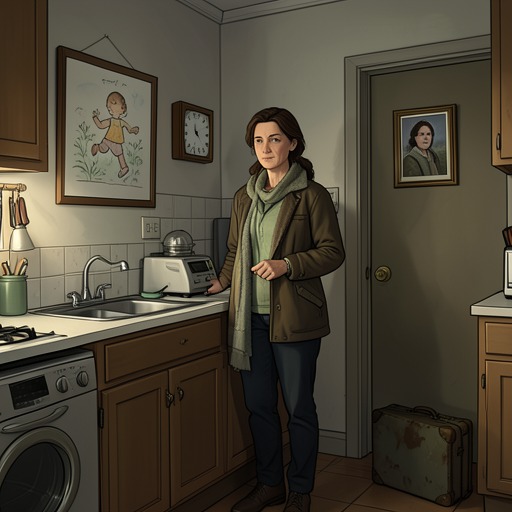
On Millie’s arrival with two pieces of luggage, the Winchester home looks sharply different from the immaculate house she remembers from the interview. The living room has cups with sticky liquid, crumpled newspapers and magazines, a dented pizza box, scattered clothing, and garbage; the dining table still holds the remains of the previous night’s dinner. Nina presents the disorder as evidence that Millie has arrived just in time. Millie sees hours, perhaps days, of work—and an opportunity to become valuable enough that Nina may hesitate to fire her if the truth about her past comes out.
The arrangement therefore offers real relief without making Millie’s security independent of her employer. She enters the house intending to unpack and clean, and Nina welcomes that labor with gratitude. Nina also gives her a new iPhone, explaining that she wants a reliable way to contact her. The gesture supplies a useful resource, while underlining how many parts of Millie’s new stability depend on the household that employs her. Nina tells her to get unpacked and then begin cleaning while Nina prepares for a Parent Teacher Association meeting; Millie’s accommodation and domestic duties are joined from the outset.
That connection becomes visible in the work surrounding Nina’s backyard gathering for the Parent Teacher Association. Nina has repeatedly reminded Millie to collect hors d’oeuvres, while Millie wakes to a messy house and is responsible for cleaning the bathrooms, gathering clothes, and distinguishing laundry from items for the dry cleaner. Nina’s husband offers to help when he sees Millie crying, reasoning that they both want Nina happy and that she will not be happy if he lets Millie fail. Millie asks him to pick up the hors d’oeuvres. The exchange shows both the volume of labor expected of her and the way her performance is framed through keeping Nina satisfied.
Parole and the Precarious Reprieve
Millie’s homelessness is also dangerous because it conflicts with the conditions of her parole. About three weeks after moving in with the Winchesters, she schedules a meeting with her parole officer, Pam, on her day off because she does not want the household to know where she is going. Millie has already moved through prison-subsidized housing and her own apartment, but after losing a waitressing job she did not tell Pam about the job loss or her eviction. At an earlier meeting, she lied about her circumstances.
She understands the stakes: lying to a parole officer and having no residence while living in a car are both violations, and she fears being sent back to prison to serve the remaining five years of her sentence. Although she tells herself that circumstances have turned around and that she can be honest with Pam, she qualifies that decision. She has told Pam she quit the job at Charlie’s, when in fact she was fired. Millie says the firing was unfair and explains that she left quietly under an agreement that the employer would not involve the police. If the police had been called, she believes she could have returned to prison. She has withheld the firing because she expects Pam to contact the employer, and the subsequent loss of her apartment has also remained undisclosed.
The later supermarket security incident shows that a roof does not make this legal vulnerability disappear. A security guard stops Millie as she pushes groceries toward her Nissan and takes her to a chair to check her purchases against the receipt. Millie fears that a checkout error could be mistaken for shoplifting and lead to police involvement, which would violate her parole; she insists to herself that she has taken nothing. The episode is not another period of living in the car, but it extends the insecurity that shaped that period: Millie’s housing depends on keeping work, while her ability to remain out of prison depends on avoiding situations that could draw police attention.
Significance
The car, rest-stop showers, cooler, and improvised hot plate give Millie’s homelessness a concrete daily scale. The same necessities also clarify why the Winchester offer has such force: it is not simply a chance to clean a large house, but an escape from sleeping in a back seat and trying to eat and wash without a home. Yet the move does not remove the pressures around her. Her place to live is bound to a job, her job depends on becoming useful to Nina, and her parole status makes truthful disclosure feel perilous. The state ends as an immediate housing crisis when Millie enters the Winchester household, but the conditions that made her vulnerable continue to shape her choices there.